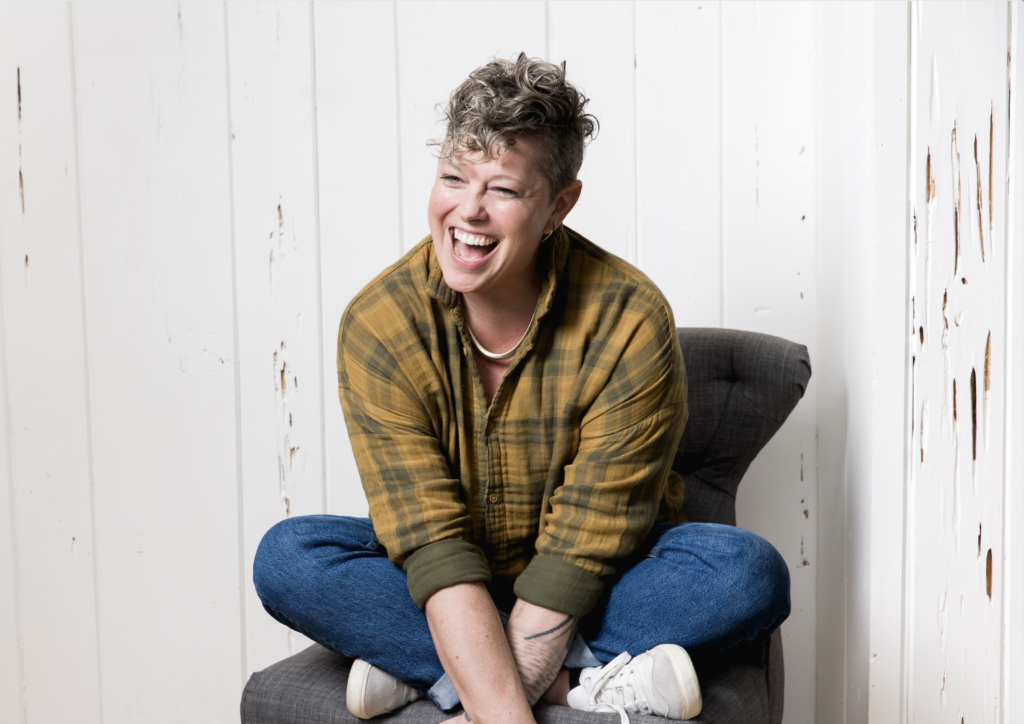
Kelly-46
A part of my purpose in this lifetime is to tell the truth. Maybe that is one of the reasons I’m here: to speak honestly, to share, to take what I’ve lived, learned, and transformed, and offer it back in some way that might be of service.
I like to think I’ve turned some of this half-lifetime into wisdom. As I’ve learned to compost life—to move pain, rage, and grief through my system—and to savor pleasure and eros, it has felt important to share the setbacks, the lessons, the growth through storytelling and writing. Maybe that is generosity of spirit. Maybe it is a contribution. Maybe it is simply the truth.
The story I want to share is tied to an experience that revealed something fundamental about my composition.
In 2022, I traveled to Peru. Ayahuasca had been calling me for several years by that point. Before then, I had never journeyed with medicine. Part of my apprehension was fear wrapped up in control. The idea of relinquishing control—of not knowing what would happen, how I would feel, what I might encounter—felt like too much for me until four years ago.
Even though I had been in therapy since I was sixteen and doing inner work ever since, this was different territory. But little by little, something kept calling.
I had put myself on a mailing list for Soltara, an Ayahuasca retreat center based in Costa Rica. Not fully knowing what I was saying yes to, only that something in me was curious.
Then one day, I was watching Chef’s Table on Netflix, and there was an episode featuring Virgilio Martinez and his restaurant, Central, located in the bohemian Barranco district of Lima. (The following year, it was named the world’s top restaurant.)
I was captivated. What moved me most was hearing how he approached the construction of the menu. Peru is one of the most biodiverse countries in the world, and he had created a fourteen-course experience based on altitude, beginning at sea level and moving upward. He was using ingredients no chef had ever used to feed people before. I remember him describing a tiny pearl of algae harvested from a mountainous lake and saying, “No one has ever eaten that.”
And I thought, “I want to taste it!”
His creativity lit something up in me. So I made a decision: I want to go to Lima. I want to experience eating his vision.
That was on a Friday.
The following Monday, I received an email from Soltara announcing they had partnered with an existing retreat center in Peru.
I remember reading it and thinking:
“Got it. I hear you loud and clear.”
I booked two spots for a fall ceremony and a table for two at Central before I even knew who would go with me. At first, I thought my partner at the time would come, but she couldn’t.
Here was the surrender: whoever was meant to come with me would come with me. A close friend—who had previously been my shadow work coach—ultimately joined me. That felt fitting.
Fast forward to the Ayahuasca journey. Within minutes, I was able to dialogue with the medicine. We were developing a relationship, and I hadn’t expected that. After an initial period where the whole world felt like a colorful celebration designed just for me, the experience began to shift.
I found myself transported into what felt like a sterile white medical room. There were no windows and no clear sense of a door—just white walls, white floors, and stillness.
Beside me, an IV cart appeared. Hanging from it were twelve drip bags that looked like saline.
Then I heard a question: “How many of these will you inject into your body?”
At first, I thought, “What the fuck is this? I don’t even know what’s in them.”
Then, one by one, I was told what they represented: Tears. Pain. Trauma. The suffering of others. The grief of children. The pain of women who had been violated. The weight of human sorrow. The heaviest parts of human experience.
Again, I was asked: “Now, how many will you inject into your body?”
I thought for a moment and answered: “Seven.”
And then the cart began rolling away.
Wait. I agreed. I consented. I’m a yes.
Then I heard something that has stayed with me ever since:
“We were never going to inject any of these into you. This was about determining how well you know your own capacity.”
It was about whether I understood my ability to hold what others could not yet process and still sustain myself. To help move it. To be a vessel for transformation.
At the time, I didn’t fully understand it on a human level, but my soul understood.
And that moment changed me.
Over time, it became less of an idea and more of something I could feel in my body.
In the years since, I’ve finally been able to own that. To claim it. To understand that this may be part of why I’m here.
That realization also changed how I care for myself: why I move, why I eat well, why I build my body, why my personal rituals matter. It all feels connected to something larger than me.
So that I can be well used in this lifetime.
Whether I’m with someone as a cuddle therapist, as a sacred intimate, in ceremony, as a friend, or simply holding space in a group, I understand now that my system has a particular utilization.
That does not feel glamorous.
It feels sacred.
And it comes with tremendous responsibility.
The containers I’m asked to hold are often deep, tender, intense, and vulnerable. I have enormous reverence for that—both the trust that people place in me and the bravery it takes to do the work they are doing.
Yet, this understanding did not arrive without pain.
A great deal of my early life taught me intensity long before I had language for it.
My relationship with my mother was tumultuous, to put it mildly. At sixteen, I realized I was physically stronger than her, and I had the terrifying awareness that if I stayed, something irreversible could happen.
One of us was going to kill the other.
So I left the next day and went to stay with my boyfriend and his family.
At twenty-four, after years of trying to maintain some semblance of a relationship with her, I made what I now understand to be one of the deepest acts of self-love in my life.
I asked my mother to go to therapy with me.
I arranged it.
Found the therapist.
Paid for it.
I asked for mutuality.
For willingness.
For buy-in.
When she chose not to come, not just to the appointment, but to the work itself, I set what I now think of as the ultimate relational boundary.
“If you are unwilling to work on our relationship, then we have reached the end.”
It was her decision, but that was the last time I spoke to my mother. That was twenty-two years ago.
At the time, it was devastating. It reinforced my deepest wounds: that I was unlovable, that I didn’t matter, that I was the broken one. Those years, from twenty-four to forty, were deeply painful. And it coincided with the time period when I met and married my best friend.
Then, at forty, I made another life-changing choice. I asked for a divorce when the relationship no longer offered the evolution it once had. And something opened.
It was the beginning of reclaiming myself: I can choose myself. I do not need someone else to choose me because I choose me. That changed everything.
The last six years have been some of the most transformative of my life.
Healing has not erased grief. It took a long time to grieve my relationship with my mother. A long time to reach acceptance. But now I feel compassion for her. I’ve even arrived at love. I don’t use the word forgiveness, but I do love her beyond measure—from afar.
Somewhere along the way, I realized something profound:
She gave me life. And until forty, I didn’t realize it is mine to live.
For a long time, I carried pain without fully understanding what it was shaping in me.
Recently, during a sacred intimate session where I was the client, something came into focus that I had never fully tracked before: I had encountered what felt like the ultimate terror at a very young age.
As I unpacked it, I could feel how I genuinely thought I was going to die at the hands of my mother. I had been reflecting on capacity—on being able to hold intensity, pain, grief, and other people’s struggles to process.
After the session, the practitioner said to me, “Do you understand why you have the superhuman capacity that you have? Why there is no emotion too big for you to deal with?”
His words landed deeply.
Something about them felt true to the level of intensity my nervous system carried for years. In retrospect, survival itself was being formed inside of me.
For a long time, I could only see those experiences through the lens of trauma and victimization.
But over time, another awareness emerged.
I know now that I encountered that level of intensity early in life for a reason.
Not to erase what happened.
Not to make pain beautiful.
But to recognize that it shaped me.
All these years later, I understand more clearly what it prepared me for.
I had been building capacity long before I had language for it.
Building muscle from infancy.
From childhood.
From surviving what felt unbearable.
From learning how to sit inside intensity before I had words.
What once lived unconsciously in survival has become something I now meet consciously.
Intentionally building strength in this adult body feels connected to the physicality required to show up for others when steadiness is needed.
That feels like part of the deeper thread.
What once felt like survival now carries awareness.
What once lived in unconscious protection now feels purposeful.
Maybe that is part of what healing has been for me: understanding that alongside the pain, I was also becoming someone with an extraordinary capacity to hold, to witness, to stay, and to love.
I am a lover.
In every sense of the word.
Since that Ayahuasca journey in 2022, I’ve continued to notice what has opened in me.
My connection to spirit, source, God, the divine—whatever language feels true in the moment—has deepened in ways that are difficult to explain. What I do know is that something in me feels more connected, more in communion, than it once did.
For most of my life, so much of my energy was spent on survival, protection, control, effort, and needing to know.
Now something softer has emerged. Something more relational. More imbued with eros.
There is movement where there was once rigidity.
There is play where there was once only seriousness.
There is clear communication where there once was self-abandonment.
And there is also remembrance.
When I look at photographs of myself as a child—especially between the ages of one and seven—I can see who I came into the world as.
I was such a light being.
Joyful.
Open.
Curious.
Confident.
Alive.
Even with everything complicated about my mother, I was deeply loved by others. My paternal grandmother made me feel seen and cared for. My father adored me. My maternal grandfather loved me deeply—his first grandchild. My mother’s younger siblings laughed and played with me.
Love was holding me.
I was around seven when my grandfather passed away. He had been the patriarch of our family, the one holding things together. And when he died, it felt like everything disintegrated.
No one else was holding it.
I can feel now how much changed in me after that.
More time with my mother.
More darkness.
More numbness and disconnection from my emotions, intuition, and body.
More unsafety and survival.
It felt as though someone had placed gauze over my inner flame. The light was still there beneath the surface, but it became harder to access.
I lost connection to that little light being. And for years, I lived through trauma, pain, and protection, trying to find my way back home to myself.
Healing has been a return. Not becoming someone new, but reclaiming the original me.
Coming back to the child who carried joy.
Coming back to the self beneath survival.
Coming back to my own light.
Now I can feel that truth in me again.
The child I once was and the adult I have become no longer feel separate. They feel like they are in relationship with one another. That integration feels incredibly powerful, particularly when combined with an inner marriage and embodiment of feminine and masculine energies.
Harnessing that level of power requires care, attention, and devotion to myself.
The more I understand my capacity, the more I realize I cannot and will not take my purpose lightly. I know the quality of my presence matters.
Healing is not giving me a new life; it is returning me to the one that was always waiting for me.
Closing Scribe’s Reflection
Some stories speak through memory.
And some stories speak from somewhere deeper.
Kelly’s story felt like listening to someone trace the invisible threads between survival, embodiment, spirit, grief, eros, truth, and return. What emerged was not simply a story about healing from trauma, but a story about capacity. About what it means to hold intensity without losing tenderness. About becoming someone who can remain present inside both suffering and love.
What moved me most was the way Kelly spoke about truth. Not as performance. Not as confession. But as devotion. Again and again, the story returned to the understanding that telling the truth is not separate from healing. It is healing.
There is also something profoundly human in Kelly’s remembering of the child they once were. The lightness. The joy. The love that existed before survival became necessary. The story does not erase the pain that followed, but it allows us to witness what it means to slowly return to oneself after years of disconnection.
Kelly’s story reminds us that healing is not always about becoming someone new.
Sometimes it is about reclaiming the self that existed before the world asked us to disappear.
And perhaps most powerfully, it is an integration story. About allowing the spiritual and embodied, the wounded and the wise, the child and the adult, the fierce and the tender, to finally exist in relationship with one another.
There is tremendous strength in Kelly’s story.
But even more than strength, there is presence.
And that presence feels like truth.
Jennifer Mark, Scribe
Voices That Matter
Storytelling as legacy. Listening as medicine.
There is no cost to participate in Birth to 100. Only a willingness to share a story from your life.
If you value this work and want to help sustain and expand it, you are invited to contribute below or join the Voices That Matter Story Circle, where the conversation continues through monthly gatherings and community connection.
Learn more about Voices That Matter — Birth to 100 and Beyond and other current projects.
A life is made of moments that are often easy to overlook while we are living them.
Birth to 100 exists to pause, listen, and preserve those moments before they disappear.
Because every life carries something worth remembering.