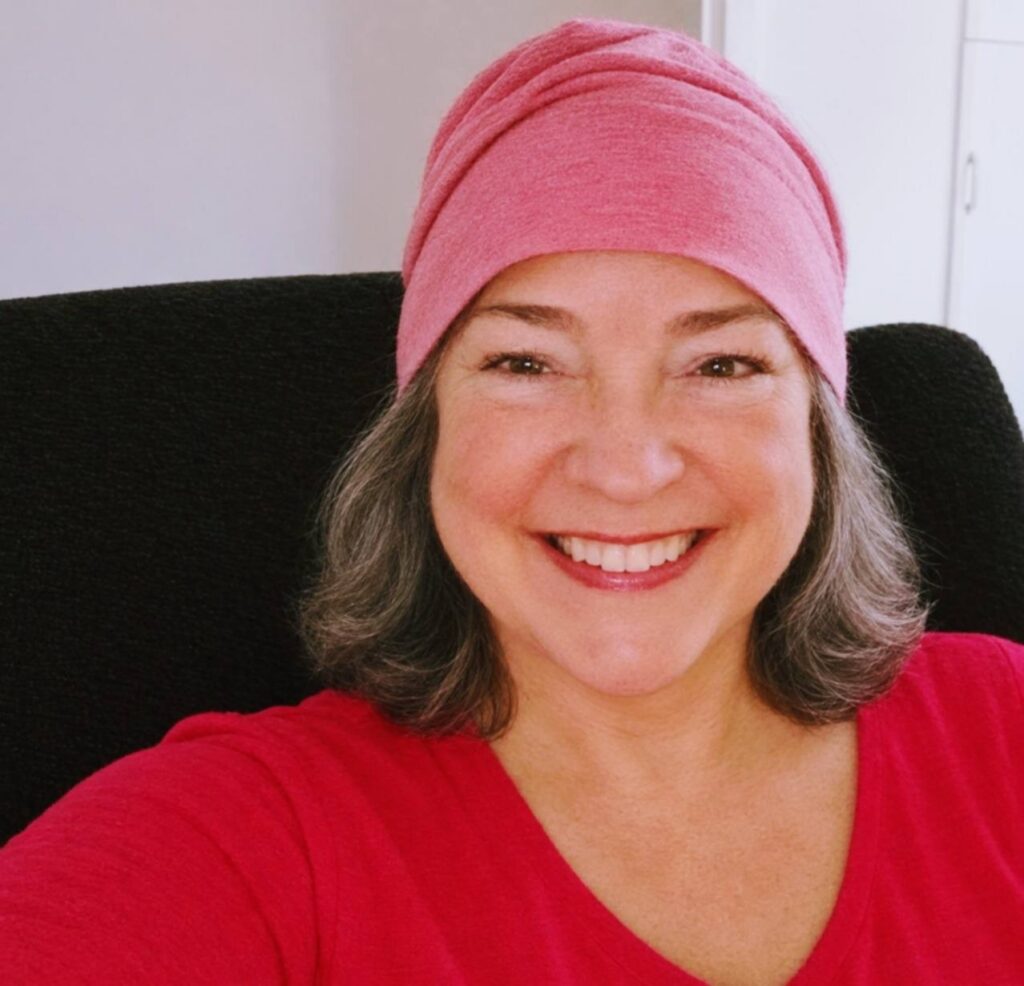
Coming Home to Myself
I think the core struggle of my life has been between these two parts of me that feel incompatible. There’s the very traditional part that wants things to stay the way they are, comfortably unquestioning, living according to certain traditions and predictable rules, and then there’s this other part that wants to stretch the boundaries, challenge norms, make my own rules, indulge my curiosity to its wildest edges, and see what else is out there. It’s always been a back and forth between those two drives. When Michael Lennox did my birth chart during a training at the Mountain, he confirmed this sense by telling me that I was born in two opposing astrological houses, one that is formed on established tradition, setting down roots in community and staying in that one place, and one that is formed on the urge to travel, explore, and be untethered by commitments, be they in the form of people or places. Finally, I had context and language with which to describe my felt experience.
Looking back, I can see that when I first encountered Shalom, that first, traditional part held dominion, but the second, unconventional part was longing to re-emerge after years of being buried, and my efforts at stifling it had led to depression, anxiety, and addiction.
(Note: I’ve received permission from the people I share details about to include and name them in my Shalom recollections.)
Something in Me Woke Up
I lived in Portland, Maine, and had a friend who was deeply involved in her church in Cumberland, particularly a women’s group that was helping her through a painful divorce. The pastor leading that group went by Jen at the time, although those of us in the Shalom community have known her for years as Vyana.
My friend invited me to an Easter service at this church. It was the Thursday of Holy Week. Vyana sat alone on a stool at the unadorned pulpit and told the story of Easter completely from the perspective of Mary Magdalene. I remember having two contrary reactions, per my familiar inner dynamic. The traditional part of me was thinking, That’s not what we do for Easter! Sacrilege! But another part of me took this huge, gulping breath, as if I had been holding my breath all this time. I had the thrilling thought: This is the truth. This is sacred.
Even remembering it now brings tears to my eyes. Something in me woke up. The way she told the story was so affirming of Mary Magdalene, not the traditional, dismissive, patriarchal version I had grown up hearing. Rather, it was Mary as a full partner to Jesus, a character of equal importance in the narrative. I left that service all riled up, both offended and excited. Here was a whole new way of telling the familiar story, and the shocking possibility of that stayed with me.
Eventually, my friend started going to Shalom because Vyana had become involved there. She kept encouraging me to check it out, offering a very detailed account of her first mat trip. You know how people sometimes suggest that when you’re inviting someone to Shalom, maybe you shouldn’t tell them too much about it? Well, she told me everything, and I think that probably kept me from going there for a while.
In the summer of 2000, my friend was asked to co-lead the newly developed Addiction and Recovery retreat at the Mountain. She invited a group of women friends from Maine to come support her. I thought, Okay, I can go there to support her leadership even if I have no interest in the retreat. By this time, pastor Jen/Vyana had moved there, and because of my experience at her church, I was curious about this place. Five of us drove down together, and it’s probably just as well that we were all in one car, because if I’d had my own car, I might have left the first day.
Coming Home to a Place I’d Never Been
I remember walking through the door and having this indefinable sense of somehow coming home to someplace I hadn’t been before. It was immediate, and I couldn’t explain it. Then, almost as immediately, everything started challenging me, leaving me off balance and uncomfortable. Conflicting impulses yet again.
Because we came with one of the leaders, we arrived hours before the retreat had officially started, so the staff was not expecting people yet. We walked into the dining room, and a man came out of the hot tub room completely naked and started hugging my friend, while greeting us with, “Is this your first time here? Welcome!” I’m standing there frozen, thinking, What the hell is happening? Where have you brought me? And the very first mat trip I witnessed involved someone working on fully and joyfully expressing their sexuality. Now, after all these years, I’d be celebrating it, but at the time I was completely freaked out.
The next person on the mat was one of the women who had come with me. She was also apprehensive about the retreat experience so far. Alistair was co-leading, and he said something like, “Well, let’s just sit on the mat and talk. We don’t have to do the breathing exercise. We don’t have to kick and scream, like we just witnessed. We don’t have to do anything.”
That was such a relief. When it was my turn, I gave myself permission to do it differently as well. I just sat on the mat with Alistair, and we talked. He didn’t breathe me or push me into doing anything. At some point, we did one little exercise where we imagined opening a space in my throat, just the size of a straw, to let air move in and out, and to let my voice come in and out. Something that simple.
When My Body Began Speaking
Well, let me tell you what happened when I went home. Anytime someone said or did something that I found demeaning, or which described a violation of boundaries or self-abandonment, I had this visceral physical reaction. I remember walking in the Old Port in Portland with a friend who was telling me about a date she’d just been on. She wasn’t attracted to the man, but he kept relentlessly pressuring her to have sex, and she shared in a weary, resigned voice, “Finally, I just gave in and did it to get him to leave me alone.” I stopped right there in the middle of Commercial Street and threw up.
Something similar happened during a session with my spiritual advisor at the time, who was rigid and judgmental. One part of me was very familiar with those qualities, which was why I was working with her. But after that first retreat at Shalom, we were having a session in which I was trying to process my experience there, and she said something incredibly dismissive about it, and I had to run into her bathroom and, once again, throw up. That other part of me making itself known again. I remember thinking, What did they do to me? It was as though on that mat in the Shalom Room, we’d both closed and opened a mechanism whereby I was no longer able to swallow shit.
That was my introduction to Shalom. I couldn’t understand what had happened; I carried a lot of judgement about it, but still I found myself wanting to go back. Initially, I attended only the Addiction and Recovery retreats because I’d developed a trust with (and a crush on) Alistair. And I met my friend to this day, Christine, this brash, beautiful woman wearing biker leather, adorned in tattoos and palpable kindness. She could see how scared I was and made a point of sitting with me during sessions and meals. She asked me what worried me most about going on the mat and I answered, “I’m afraid I’ll cry.” She replied, “You don’t have to do anything you don’t want to do, but I hope one day, when the timing is right, you cry so hard that snot runs down your face.” I didn’t get it, but I instinctively recognized that she knew something I didn’t. And many retreats and mat trips later, Christine was there, hugging me and cheering, when I finally did cry that hard. And finally understood how this perceived loss of control, which I had been fighting so mightily for so long, was exactly what I needed to do to take back my power.
Eventually, Helen came on as a permanent co-leader, and, like so many of us, I just fell in love with her. Then I fell in love with all of it. Those A&R retreats became my way into the process and community.
A Little Dream That Found A Way
By 2003, I had been working as a psychiatric social worker for years, and I was exhausted and burned out. I loved my clients, colleagues, and employer, and was proud of the work we did in the world. But I had no conscious awareness of my own trauma. I was getting triggered left and right without understanding what was happening. At that point, I wouldn’t even have identified myself as a trauma survivor, which makes me laugh now. I’m a textbook case. In fact, while my work at Shalom revealed this truth, it was officially confirmed when I received a diagnosis of complex PTSD from two separate clinicians in the mainstream world, neither affiliated with Shalom.
I remember going to the Labor Day work weekend at Shalom, shortly after my first retreat. In those days, the internship started in October, and there was a whole ceremony welcoming the interns into the community on Labor Day. Helen had recently moved there from Chicago, and she was sitting on the swing on the front porch with me, talking about what that move meant for her. I remember thinking how wonderful it would be to just come and live there and be immersed in the work. It was a little dream that got planted that weekend.
In the year before I went to Shalom, I had endured a series of painful events including a sexual assault and the unexpected death of my fiancé, and I could not pull myself out of the resulting depression. Several friends expressed ongoing concern for me. At that point, I was taking the six-month Intro to Shalom Process Training led by Vyana and Helen, traveling to the Mountain once a month from Maine with two work/Shalom buddies. My employer, Catholic Charities, paid for that training with my yearly professional development allotment. This unexpected alignment makes me grin.
The leaders would sometimes check in on the trainees between sessions, and on one such phone call I said something to Vyana about wishing I could just walk away from my life and do the internship at the Mountain. Although I can’t remember her exact words, the message was that if the thought had occurred to me, I’d probably end up doing it, and the way would make itself clear. And that’s exactly what happened. My grandmother passed away and left me an inheritance. Suddenly, I had the money to take time off work and pay for an internship. And the people in my life, particularly my Mom, who had been so worried about me, encouraged me to take a sabbatical from work, pack up my Toyota, and head off for six months in the Catskills. Before I left, my Mom slipped a plaque into my bag which read, “Wherever You Go, Go With All Your Heart”. That plaque has gone everywhere with me since that temporary move that ended up becoming permanent. The little dream had found a way.
Learning to Stay in Relationship
I moved to Shalom in the fall of 2004. I could speak volumes about the challenges and richness of that internship alone. Ross was doing the internship at the same time, and toward the end we both said to Helen, “Geez, I wish we could just stay and do it again.” And Helen, being Helen, asked, “Why can’t you?” We looked at each other and thought, Oh, yeah. Why can’t we? So we took the summer off and came back for another internship. And then we both stayed on as residential staff. He became, and remains, a brother to me. I remember our initial reaction to the IPRs, or Interpersonal Relations meetings, which the residents held weekly to check in with and support each other, and, most alarming to us, air grievances with each other openly. We both spent part of our childhoods in homes where conflict was avoided in loaded silence until it erupted into verbal abuse or violence. As Ross would joke, “If anybody started to express anger, you could be sure the dog, the couch, and then a family member, was going through the window.” And at that first IPR, he and I literally sat on one of the couches in the living room and found ourselves holding hands like frightened children while one resident angrily confronted another. But, this group not only expressed and received the expression of anger (and all their emotions) openly, but were encouraged to do so, and do so in a way that not only allowed them to remain in relationship, but actually deepened their connection. They didn’t do it perfectly, and there was always a learning curve, but this was a template for a profound lesson I learned at Shalom. Honesty and uncomfortable emotions could be welcomed with goodwill. Confrontation could be navigated with goodwill. Nobody had to choose sides. No one was ostracized and kicked out. People called each other on their shit, people owned their shit, apologized, tried to do better next time, forgave and were forgiven. And, even though there was always, at some point, a next time, everything was okay. To quote Ross again, “ Nobody died”. In fact, they seemed more alive than anyone I had previously met. It was just one of what we call “a corrective emotional experience” that I have had at Shalom. We get to face something painful or scary and see it through to a different conclusion. Now, I no longer equate confrontation and disagreement with danger or disharmony. I view them as paths to meaningful connection. In fact, I don’t trust people who can’t acknowledge and navigate conflict. The people I value most are the ones whose ability to be direct would have previously driven me away. Now, I am drawn to those honest relationships where me showing up in all my messy fullness is not just tolerated but expected. And I can trust that they will show up in kind. We call each other on our shit, we own our shit, we apologize, try to do better next time, we forgive and are forgiven, and even with the inevitable next time, everything is okay. Nobody dies. I have to add the disclaimer that this is in no way about tolerating bad behavior or abuse. It is about allowing ourselves to be imperfect humans in authentic loving relationships.
Towards the end of my second internship, when Helen and Stirling were preparing to move to Asheville, North Carolina, to open their own retreat center, Vyana asked whether I’d be willing to stay on a bit longer and help with the office. Vyana, with Stirling part-time at the registration desk, had been handling most of the administrative work. She did this in her very limited spare time. Her desire was to turn over administrative tasks and focus fully on retreat and training development, directing the internship, and of course, continuing to lead retreats. They needed someone to bridge the gap while they figured out next steps. Eventually, they just offered me the newly created job of full-time registrar.
I left for a while around 2009 to help my mother back in Maine, because my stepfather had fallen sick. Later, when the stewards had taken over and Nance came on as director, she hired me back as a full-time administrator. All told, with that little break, I lived at Shalom from 2004 until 2013.
Making It a Real Office
When I first started working in the office, it was right off the kitchen and the hot tub room. There were desks, computers, and filing cabinets (that we locked) in a highly trafficked space, and the situation didn’t afford staff or retreatants much privacy. Stirling had begun transforming the office by developing standard business practices for registration, etc., but was moving before finishing the project. The database still needed a serious overhaul. Lawrence and Joy would hand me paper bags full of receipts at the end of every month. If they remembered to save receipts. They were gifted leaders, but that kind of organization and administrative detail wasn’t where they wanted, or could even afford to put their focus. When Stirling was not on site, office tasks were handled by rotating residents and interns whose primary responsibilities were elsewhere. Calls went to voicemail, to be returned later, unless a staff member or resident happened to be near the phone in the course of performing their usual duties. Everyone knew it was a gap in service, but it hadn’t been remedied yet.
The Voice That Welcomed People In
I remember Joy saying that it was a perfect fit for the Mountain and me. I had no interest in leading, but I had a great interest in getting that office organized. I could focus fully on all things administration. I updated the database. I became a consistent contact for local vendors and our local NY Health Department office. And a consistent voice on the phone for new and returning community members. To this day, I am told how much that consistency meant in their retreat experience. “Yours was the first voice I heard when I called the Mountain. I was scared, I had a lot of questions, and you made me feel welcome.” Frankly, I think being there to answer that phone for so many years is one of the most important things I have done in my life.
Once I was in place as that anchor, plans moved forward to create a dedicated office space, away from where retreats were happening. A community member donated new computers, and the garage was renovated by volunteers from the community who were contractors, builders, and electricians, into what is now the office. As is often the case at Shalom, it was a labor of love by community members who volunteered their professional skills to this place that means so much to them.
I think about all the people who contributed their time, knowledge, and talents, on a volunteer basis, to making Shalom work. I am grateful, in particular, to Jeff S, an accountant in the community, who donated hours of his time teaching me to do bookkeeping and basic accounting. My contribution wasn’t leading retreats. It was helping create the structure that supported them. We made it a real office, and that was something concrete I could give back to Shalom.
Discovering That Joy Was the Hard Part
Most of my compensation for working at Shalom was room and board in a little cottage on the beautiful property, the opportunity to attend retreats and trainings, and to receive clinical supervision and spiritual direction from and with brilliant, vibrant people. I was intellectually, spiritually, emotionally, and physically engaged in my life. I loved my time there. As part of it, I was blessed to get to do Jungian analysis with Joy. What an extraordinary gift.
One of the things she said to me in a session has stayed with me all these years: “It’s not what happens to us that matters, it’s what we tell ourselves about what happened to us.” That was where I began to understand that I could change my story. The facts haven’t changed. What happened to me happened. But what I tell myself about it, and the feeling tone surrounding it, has completely changed because of the work I did at Shalom.
Before I arrived, I was dealing with depression, anxiety, and years of unprocessed trauma. I had tried talk therapy and antidepressants, and I don’t dismiss those interventions. They were helping me stabilize, but that wasn’t enough. They were not helping me move through what I was carrying. It sounds almost cheesy to say Shalom saved my life, but in many ways, that’s how it feels to me.
I needed help getting out of my head and allowing things to move through my body. The somatic work done on retreats was so important for me because much of what I was carrying couldn’t be reached by thinking or talking about it alone.
And the interesting thing was that I assumed I needed to do all this anger work. Helen saw something different. She said, “No, I don’t think so. I don’t think you have a problem with accessing your anger. I think you need to do joy work.”
That was quite a revelation. I could do anger till the cows come home. But joy? Pleasure? Hope? Those were much more threatening to me. And felt completely out of my reach.
The Laughter I Had Been Holding Back
Sometimes on the mat, when I began moving my body in the now familiar exercises, I would find myself overcome by deep belly laughter. There are certain people at the Mountain who bring that out of me. To this day, I can’t hug Jeff H without the two of us erupting into laughter with no discernible context. It would just start coming, and I couldn’t stop it. It would happen when I was getting a massage. It would happen when I was having sex (Which I would make sure to explain to potential lovers beforehand!) That was what had been trapped inside me: joy.
When I think about all the ways we learn to shut ourselves down, particularly as women, it’s no wonder I had to learn this new way to be with my emotions. God forbid we be too big, too loud, or too anything. I hadn’t understood how much of myself I’d been holding back, or how frightening it could be to allow myself to feel something good. Shalom gave me access to joy in a way I hadn’t known was possible.
Bringing My Soul Back Into My Body
The summer between my two internships, Helen encouraged me, because I both longed to travel to new places and was scared to leave my familiar surroundings (those two opposing impulses), to take a cross-country trip to attend a friend’s med school graduation. So I drove by myself from Portland, Maine, all the way to Portland, Oregon. Right before I left for my trip Helen gave me a copy of Dr. Seuss’ “Oh, The Places You Will Go!” I’ve since passed that book on to another Shalom friend embarking on an adventure. And she then passed it along in kind. I don’t know who has it now, but it is one of the ways Helen lives on.
While I was in Oregon, my friend suggested I make an appointment with a shaman with whom she had been training. Before Shalom, I probably never would have considered such a thing. But by then I had become much more open to exploring different ways of understanding my experience.
The Soul Retrieval
We did a drumming session that lasted several hours. The shaman called it a Soul Retrieval. There were no drugs involved, just drumming and music that helped create an altered state. During the session, this woman who had never met me before that day described what she was seeing in incredible, accurate detail. She identified a particular incident in my childhood and said, “This is when your soul left your body.”
I grew up with a father who was mentally ill and very violent. By the time I was five years old, I was a frequent flyer at the local ER, with broken bones and stitches to show for it. I learned to help my mother lie about how I got injured because telling the truth led to worse consequences, mostly for her, from my father’s subsequent rage when the police, doctor or social worker left.
The shaman described my soul as having left my body during one of those violent experiences, and she said it remained connected only by a tether. She said my work was to bring my soul back into my body.
On one hand, it sounded so “woo-woo”. On the other hand, I thought: Yes! That is absolutely true. Time and time again, while doing energy or body work with various practitioners at Shalom, they would, with no information volunteered from me, and no way of knowing the story because I have never even shared it on retreat, have an intuition about that same incident. My work really is about coming back into my body, coming back into the life I’d fled in fear.
That’s another thing Shalom did for me. It opened my mind to different perspectives, modalities, and traditions that I wouldn’t have considered valid before I went there. It showed me there are ways of knowing things that can’t be scientifically explained (yet) but are nonetheless real. It allowed me to explore new ideas without feeling that I had to abandon everything that had shaped me thus far.
Finding My Way Back to God
I grew up Catholic, and by my early thirties, because of several painful events layered over unprocessed childhood trauma, and my refusal to accept particular dogma, my relationship with the Church and with God had become strained to the point of estrangement. This was a pervasive source of grief for me because when I was a child, God felt as close to me as my own breath. My grandmother was a devout Catholic, but she was also a free thinker, unafraid to question the established order of things. Even when it came to certain teachings of the Church, she would muse, “That doesn’t feel quite true to me”. She attended Mass daily, riding the bus into Boston to St. Anthony’s shrine, rain, snow, or sunshine, and I would often accompany her. We would explore downtown Boston after Mass, and talk on a bench in the Boston Garden, watching the swan boats. By this time, my Mom, brother, and I had moved in with my grandparents and two teenage aunts because my grandmother had witnessed one of my father’s violent outbursts firsthand during a visit. She waited until he left the house for work, bundled us into her car, and took us home. In addition, my Nonnie took in a family friend whose father had kicked him out of the house when he came out as gay, and my aunt’s friend whose father had disowned her for getting pregnant by a black man. It was a full, hectic, messy, safe household with my harried grandmother at the center, holding it all together. But in those hours at Mass and afterward, I had my grandmother all to myself. These outings are some of my happiest memories. She also made a point of teaching me that I needn’t go to Church to feel God. God could be found everywhere and in everyone. “The world is your Church”. I think I learned how God loves us by watching my grandmother do it, and I inherited both my respect for and my ability to challenge authority from her. So, it was a great loss to not be able to feel my Church, my relationship with the Divine, anywhere. And it feels very fitting that I was able to pay for my internship(s) at the Mountain with money my grandmother left for me.
A Different Kind of Church
One of my formative memories of Shalom is of attending the Midwinter Mystic retreat led by Nance and Roger Cramer, and being able to face that loss of connection with the Divine. And of beginning to find, or dare I say, co-create, my personal Church again.
Roger was a retired Episcopal priest, and given my background, that carried a certain authority for me. One afternoon, seeing that I was struggling with the material, he spent the entire break talking with me in the meditation room. I remember it was snowing outside, and you know how beautiful that room can be, looking out that bank of windows at the woods and the path up to the high meadow.
He sat with me while I poured out my grief and anger over leaving the Church and feeling abandoned by God. He didn’t try to fix it, tell me I was wrong, or talk me out of what I was feeling. He just really heard me. For the first time, I felt that someone with that kind of spiritual authority could listen to my experience and simply validate it. The realization washed over me that maybe even this struggle was not only okay, but part of what needed to happen to fulfill my story.
Roger introduced me to Richard Rohr, a Catholic priest whose teachings challenge some very traditional perspectives. Reading his work has become another doorway back to God for me.
I think about how I had assumed something was wrong with me, something that needed to be fixed before I deserved to be loved. At Shalom, those very places in me were met with acceptance and love, and only then could something shift. It sounds so simple, but it’s not easy.
Over time, I’ve found myself coming back to my Catholic roots, although in a much more expansive and nontraditional way. I can appreciate the richness of that tradition without feeling that I have to accept every interpretation or rule that comes with it. There’s room for more than one way of understanding the sacred.
The Container Matters
One of the things I loved, and feared, when I first came to Shalom was the openness. There was this sense that you weren’t going to be judged for what you brought into the room or what emerged during the work. At the same time, I think the container was sometimes a little too wide open. In my experience, particularly for people who had been wounded sexually, there needed to be more boundaries in place.
I’ve watched Shalom evolve over the years, and I think that evolution is crucial for Shalom’s longevity. I remember Lawrence describing it as Shalom moving out of its adolescence into its maturity.
When I returned for the December low-cost retreat, led by Judi and Nance, two years ago, after being away for some time, I was impressed by the changes. What struck me was that Shalom had managed to maintain so much of the openness and freedom that made it special while strengthening important clinical boundaries.
I think it’s actually easier for people to test their own boundaries, open up, and go to those scary places when they know someone is really holding the container. That structure doesn’t have to shut down the unusual or unconventional things that sometimes need to happen. It can make them safer. Allow us to risk going deeper. I am so pleased to see that Shalom is finding that balance between structure and freedom. It’s the balance I have been longing for within myself.
A Community Beyond the Mountain
The relationships I developed at Shalom have remained part of my life long after I stopped living there.
I left the Mountain in 2013 to care for my ailing parents, my Mom and my stepdad, Harold. I have navigated some devastating physical experiences in the past 13 years, including cancer treatment, heart failure as a secondary side effect of chemotherapy, and severe, degenerative arthritis in both hips. My body has literally forced me to slow down and even come to a complete stop. I believe, on one level, my illness has been my body revealing and releasing the deep pain I couldn’t otherwise express. (Shout out to Louise Hay, Marion Woodman, Peter Levine, and others who wrote so eloquently about considering the connection between mental and emotional blocks and physical dis-ease) It’s difficult for me to need help, let alone ask for it. The connection to The Skills and Principles of Loving passed down by Shalom founders, Jerry and Elizabeth Jud, particularly, “Love is a response to need”, probably goes without saying. I have a feeling that one will be a lifelong lesson for me.
The Community That Showed Up
The Shalom community has shown up for me on every level. My Mom died while I was in the hospital during the pandemic. Nance and Judi made the 10-plus-hour trip from New York to Downeast Maine, which literally required written permission from the governor’s office to be traveling during the lockdown, to be with me in those days and weeks immediately afterward. Shalom folk quietly sent me checks, paid my bills every month, and organized and donated generously to a GoFundMe campaign when I was too sick to manage anything, let alone work. There are too many people to name here, but each of them is forever on my heart
Now, a mere month out from a successful complete right hip replacement surgery, and resigned to waiting months, enduring the disabling pain in my other hip, for the second surgery that will return me to full mobility, my Ortho surgeon had a cancellation in his impossible schedule and offered me a much earlier date. My first reaction was hesitation because my housemates are going to be away for several weeks at the time. I wondered how I could manage post surgery recovery without them.
Learning to Receive Help
But then I started reaching out to friends, simply to ask their advice. Was it foolish to consider having the surgery when I would be alone? Almost immediately, I had an entire support system in place. People offered to be with me at the hospital, to come stay with me post-surgery, visit in the weeks afterward to check on me, or buy needed supplies that my insurance won’t cover. Almost everyone who has stepped forward for both surgeries is someone from Shalom. Thank you, Barb, Deirddra, Mark, Ross and Ruth, and Judi. Thank you. I am not, and have never been, alone.
Within hours of being offered an earlier surgery date, I had friends in place for the whole recovery period, and I was able to call my surgeon’s office and crow, “I’ll take it!”
That’s what Shalom is, too. It extends so far beyond the walls of that little farmhouse in the Catskills. Those connections are real, and they endure.
Coming Home to Who I Am
When I try to explain Shalom to someone who hasn’t experienced it, I sometimes have difficulty finding the words. A friend from grad school with whom I have reconnected in recent years still can’t quite believe that the Karen he knew went to Shalom in the first place, much less moved there and stayed for years. Talking about the place with him, because I use my time there to explain some of the fundamental changes he sees in me, has clarified my understanding and appreciation of Shalom. So, it’s perfect timing that you invited me to share my story for this project.
And I get that skepticism. If someone had explained the mechanics of a retreat to me before I’d experienced one, I might have thought it sounded completely crazy. But what happens there is so much bigger than the mechanics of the work.
Shalom helped me go into those dark, painful places that I didn’t want to face. It helped me release things I’d been carrying for years. But it didn’t just leave me there. There was also the possibility of a new metaphor, a new way of looking at things that helped me move through them into the next chapter of my story.
Where Transformative Love Lives
And there was the profound experience of being accepted and loved in those places where I had always believed something was wrong with me. The places I thought I had to hide to be loved. In fact, those are the places where transformative love lives. And letting other people see them allowed me to finally begin accepting the love that is offered to me instead of keeping it at bay. What are the lyrics to that Leonard Cohen song we like to sing at the Mountain? “There is a crack in everything. That’s how the light gets in”?
I came to understand that the facts of my life didn’t need to change for my relationship with them to change. I could carry the same history without having to carry it in the same way.
Choosing an Open Heart
When I think about what Shalom ultimately gave me, the closest I can come to describing it is this: It was like getting to come home to the self I had shut down and hidden so far away that even I had forgotten where I had left her. I did it to protect her. To keep her alive. But that protection had become the thing that was killing her. Helen was my mentor during my second internship, and she used to ask me, so often that it annoyed me, “Are you going to live with an open heart? It will surely get broken. So, are you still gonna do it?”
In the beginning, I walked through the door of Shalom and felt that inexplicable sense of coming home to a place I’d never been before. I didn’t understand it then, and there were plenty of moments when I was frightened enough to want to run right back out that door. But something in me recognized all the possibilities inherent in staying..
All these years later, I can see how much of my journey has been about reclaiming the parts of myself that were frightened, shut down, or simply inaccessible. Not just the pain and anger, but the laughter, the pleasure, the hope, and especially the joy.
I still feel the pull between those two parts, the traditional one that wants to remain stationary and live within acceptable social norms, and the nonconformist journeyer who wants to push the boundaries and discover what else is possible. Maybe I don’t have to choose between them. Perhaps part of coming home to myself is making room for all of it. All of me. With an open heart that will surely get broken. But I’m still gonna do it. Because this is where joy lives.
Scribe’s Reflection
Coming Home to Myself — Karen’s Story
The Parts of Ourselves We Leave Behind
What stayed with me as I listened to Karen’s story was how much of her life had been spent trying to manage two seemingly opposing parts of herself. One that wanted stability, familiarity, and tradition, and another that longed for freedom, exploration, and the possibility of something different.
I found myself recognizing that struggle. We can spend so much of our lives believing we have to choose one part of ourselves over another, often pushing aside the very parts that are asking for our attention.
Karen’s story also made me think about the ways we learn to protect ourselves. Sometimes those protections are necessary. They help us survive experiences we don’t yet have the capacity to understand or process. But over time, the very things that once kept us safe can begin to limit how fully we allow ourselves to live.
What struck me about Karen’s journey was not simply the pain she had experienced, although there was plenty of it. It was her willingness, sometimes reluctantly and sometimes with great resistance, to keep showing up for herself. To question what she had always believed. To allow something unfamiliar to challenge what she thought she knew.
And there was something particularly revealing in what she discovered along the way. For so long, much of her work had centered on understanding and releasing the pain she carried. Yet as she began to reclaim the parts of herself that had been hidden or shut down, she encountered something she hadn’t expected. The emotions she found most difficult to allow weren’t necessarily the painful ones. They were the ones that made life feel good.
When Joy Becomes the Hardest Work
I was particularly moved by her realization that anger was not necessarily the emotion she needed help accessing. It was joy. Laughter. Pleasure. Hope. The very things we often imagine will come naturally once we have worked through everything else.
I wonder how many of us have become more comfortable with our suffering than with our happiness. We can become so accustomed to bracing ourselves against disappointment that, without realizing it, we also close the door to delight.
Karen’s experience reminds me that healing isn’t only about what we are finally able to release. It is also about what we become willing to receive. And sometimes allowing ourselves to experience joy, without waiting for everything else to be resolved, may be some of the most vulnerable work we ever do.
The Courage to Stay in Relationship
Another thread that stayed with me was Karen’s experience of learning that conflict doesn’t have to mean the end of connection. That disagreement, honesty, and uncomfortable emotions can exist within loving relationships without someone having to leave, withdraw, or be cast out.
I find that particularly meaningful. So much of our lives can be spent trying to avoid the very conversations that might bring us closer. There is something powerful about discovering that we can remain fully ourselves, even in disagreement, and still remain in relationship.
I was also touched by the way the Shalom community showed up for Karen during some of her most difficult years. There is a particular vulnerability in needing help, especially for someone who has spent much of her life learning to be strong and independent. Her willingness to reach out, and the response she received, reminded me that receiving can sometimes require as much courage as giving.
Making Room for All of Who We Are
As a Scribe, I am continually reminded that our stories are rarely about just one thing. Karen’s is a story of trauma and healing, faith and questioning, independence and connection. But woven through all of it is a woman discovering that the parts of herself she once believed were incompatible might not need to be reconciled by choosing one over the other.
Perhaps wholeness isn’t about becoming someone different. Perhaps it is about making room for all of who we already are.
Choosing to Live with an Open Heart
I keep returning to the question Helen asked Karen about living with an open heart, knowing it will surely be broken.
What a question to live with, and what a courageous answer Karen continues to give.
Thank you, Karen, for trusting me with your story and for reminding us that coming home to ourselves isn’t necessarily a destination we finally reach. It is a relationship we continue to cultivate, a willingness to remain curious, and a choice to keep opening, even when closing might feel safer.
And perhaps, as Karen so beautifully reminds us, that is where joy lives.
Jennifer Mark, Scribe
Voices That Matter-The Scribe Project
Storytelling as legacy. Listening as medicine
This story is part of Voices That Matter: Shalom’s 50th Anniversary
There is no cost to participate. Only a willingness to share a story.
This project, like all community offerings within Voices That Matter – The Scribe Project,
is sustained through the support of those who feel called to be part of it,
by sharing stories, spreading the word, or contributing to its creation and ongoing life.
If you feel moved, you are welcome to contribute in whatever way feels right.
Shalom holds 50 years of stories.
I would love to include yours as part of this growing living archive.