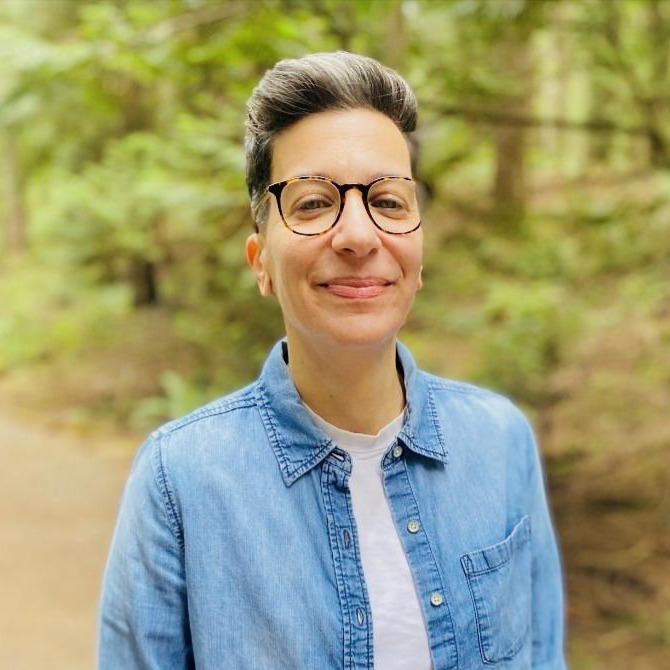
Almost by Accident
I first found Shalom in 2019, almost by accident.
I was in therapy, and I wanted something new. Something different. Maybe even a little bit of an adventure. Therapy had taken me far, but there was something I couldn’t quite reach. My therapist had a connection to Shalom, and I remember Googling, reading just enough to feel both curious and unsettled.
I signed up for a Nance and John retreat on a whim.
The Drive from Toronto
The drive from Toronto was long, but I didn’t mind. I’ve always liked driving. Being alone in the car, heading toward something unknown, felt right. Like I was already stepping outside of my life before I even got there.
No one told me there would be dancing.
Which, honestly, was probably a good thing.
Curiosity and Fear
When I arrived, I felt it immediately.
Curiosity and fear, side by side.
There was something alive in that space. Something I didn’t fully understand, but I could feel it working on me before I even chose it. It tapped me into that kind of awareness you get when you see something. And then you can’t unsee it.
When I saw my first mat trip. It was exactly that.
“Oh… now I can’t unsee this. I can no longer pretend I don’t know this.”
It settled somewhere deep inside me, like it wove itself into who I am.
And right behind that awareness came a quiet thought:
“I don’t know if I can do that. I don’t know if I can be that vulnerable.”
The First Mat Trip I Witnessed
The mat trip was about someone who grew up in a home marked by domestic violence, and it stirred something in me. Memories and feelings I had spent years not quite naming, maybe not even being able to grasp the weight of it all.
For a long time, I didn’t fully realize that what I experienced growing up had affected me in the same way. I was there, witnessing it and living within it. But my nervous system held onto something I didn’t yet have words for. For most of my life, I simply wasn’t fully aware of what it had imprinted on me.
But something in me knew that wasn’t the whole truth. I couldn’t help but wonder, “What are the odds that this would be the very first piece of work I’d come across?”
A lot of scared child energy came up in me in that moment. It resonated deeply, but I didn’t believe I had the capacity to go there like that. The wailing, the crying, the screaming. It didn’t feel like something that belonged to me.
But it did. I just didn’t know it yet.
Stories
I love stories. I’ve built my life around them. I am now a therapist, and my early career was in community mental health settings. I’ve had the privilege of meeting people in the grit of their stories and in their most vulnerable moments. Much of my work has been about stepping into people’s worlds and sitting with trauma, mental health struggles, and homelessness. I know how to sit with that intensity.
But sharing my own story? That was something else.
Friday Morning Stories
Friday morning stories landed hard for me.
How do I give people a glimpse without giving everything?
How do I tell my story without opening every door to my parents, my siblings, and the home I grew up in?
To try to explain who and why I am the way I am.
At Shalom, I couldn’t hide behind that.
The First Retreat
My first retreat broke something in me.
I went in thinking I wasn’t quite sure where my work would start. I guess a part of me had an agenda, like I often do. But the deeper work doesn’t really care about your agenda. It meets you where you are, whether you’re ready or not.
My first mat trip went straight into a grief I wasn’t expecting.
I don’t think I had ever cried like that before in my life. It felt like years and years of grief pouring out and crying, screaming, releasing something that had been living in me for a long time.
And doing that in a room full of people, with someone there to actually hold me in it? That was completely new. That mat trip was with Nance, and it shifted something in me.
The Beauty in the Messiness
There are still things I don’t expect at Shalom. But I’ve learned that even when I arrive with an agenda, the messier parts of me find their way out anyway.
And I think there’s something beautiful in that messiness.
My career is about sitting with other people’s mess. The real challenge has been learning how to see beauty in my own and how to find power in it.
How Do I Move Forward Now?
I left that first retreat different, more than I expected. Lighter, with less baggage than when I arrived. It felt like an opening, and also an unraveling.
I remember going home and thinking,
“How do I move forward now, knowing what I know?”
I didn’t mind going back to my empty apartment. I actually preferred it. I didn’t want to explain what I had experienced. It was still unfolding, and I didn’t want to reduce it into words or something smaller.
So I didn’t try.
Softened
Something softened in me through that experience. And that softness felt both beautiful and terrifying.
I’ve always had a harder edge to me. I can see how my childhood shaped that. And then to come home feeling so softened. It shook something foundational.
It left me wondering, “How do I move through the world without that armor?”
Around that time, I had started working with a new therapist who had done Shalom work. Being there deepened my trust in that relationship, and I still work with them today.
A Deeper Longing
What shifted most was a deeper longing to understand myself and other people.
And that kind of depth isn’t something everyday life really holds space for.
I actually found it hard to go back to my job after that first retreat. Something had shifted, and the work I had been doing didn’t feel the same. It was destabilizing in a way. But, in a way that I knew was necessary.
I had just experienced something so alive, and then I was back in my regular life.
I’m no longer in that same job now, though I’m still in the same field.
Emma
And then there’s this part of my life I never could have predicted. I met my wife, Emma, at Shalom, and we got married three months ago.
She lives in Seattle, and I live in Toronto, so we’re now navigating a long-distance marriage across two countries, immigration, logistics, all of it. It’s wild, and so, so beautiful.
Embodied Work
Before Shalom, I had already spent years in therapy. But the embodied work there felt completely different.
And honestly, it was really scary.
I don’t always present in a traditionally feminine way, and I don’t always experience myself through that lens either. So being brought into my body in that kind of space felt complex. This is my body, but it hasn’t always felt fully aligned with who I am.
And yet, my relationship with my body has changed.
Before Shalom, I was treating my body in ways that weren’t supportive. That has shifted. I take care of myself differently now.
But at the time, the embodied piece all felt foreign. Like, why are all these people hugging me?
And I have to dance? Ugh.
What Do I Fill That Space With?
If I try to describe Shalom now, I go back to that first mat trip. The grief. The release.
Letting all of that out made me feel lighter. But then the question became…
What do I fill that space with?
How do I feel embodied in a world that doesn’t always feel safe?
How do I hold both feeling everything deeply, and also feeling afraid of the world around me?
Some days, that’s still really hard. It shifts depending on where I am and who is around me.
Safety and Being Seen
In Canada, there’s a sense of familiarity. A kind of safety, even if it’s not entirely real.
In the U.S., it feels different. There’s more tension. More noise around gender, sexuality and safety.
I’m aware that my gender and sexuality is something people often try to figure out or make sense of when they meet me. I can feel how people try to place me into a box when they see me and that can be unsettling.
More Consciousness
Shalom has changed me. It’s given me a framework. A way of understanding life, and love, and people that feels deeper and more honest.
It makes me want to tell everyone about it. But I also know it’s not my job to make people do their work.
It’s brought me into more consciousness, which is both beautiful and painful.
Being around people who want that level of awareness feels incredible.
But being around family, where old patterns are still running, is still hard.
An Energy of Release
If I had to put Shalom into one sentence, I would say this:
There’s an energy of release there and of being fully witnessed.
When I walk in, I can set down whatever I’m carrying, and it begins to loosen and release.
And what I see now that I didn’t see then is how important it is to be authentic, with myself, and with others.
Even though it’s scary.
Fully Seen, Fully Expressed
Being a queer person and being fully seen, fully expressed, is still a work in progress for me. There’s something powerful and vulnerable about it, and I’m still learning how to hold it. It can make people uncomfortable even sometimes at Shalom.
There’s still work to be done, and there are also moments where I feel fully seen.
Step Into It
And if I think about someone coming into Shalom now, I would say:
Step into it.
Embrace it.
Don’t be afraid to leap.
It’s difficult. It’s messy. But there is something so beautiful on the other side.
Let it all come out. We all need somewhere we can go and be held.
I Wish I Had Met You
And if I could say something to Jerry Judd, it would be simple.
I wish I had met you.
From what I understand, there was a fearlessness in the way you moved through life. A willingness to push edges and to not worry about being too much.
That kind of energy feels rare. And honestly, it feels refreshing.
Scribe Reflection
There is a quiet honesty in Tasia’s story.
It doesn’t try to resolve anything too quickly. It allows the contradictions to exist.
Softness and fear, release and uncertainty, the longing to feel deeply and the reality of not always feeling safe in the body.
What stands out is not just what they moved through, but their willingness to stay with it.
For much of their life, Tasia held space for others’ stories. At Shalom, they found their way forward, not through explanation, but through experience. Through grief that rose unexpectedly, and a space where it could be witnessed and held.
There is courage in that kind of opening.
It speaks to something many don’t name. The disorientation that can come after a shift. The return to a life that feels different, even when nothing around you has changed.
And still, they continued.
More aware. More open. Still becoming.
Their story doesn’t ask anything of us.
It simply reminds us what it looks like to be in process.
To let something move, to be seen, and to stay.
Jennifer Mark, Scribe
Voices That Matter
Storytelling as legacy. Listening as medicine
This story is part of Voices That Matter: Shalom’s 50th Anniversary
There is no cost to participate. Only a willingness to share a story.
This project, like all community offerings within Voices That Matter – The Scribe Project, is sustained through the support of those who feel called to be part of it, by sharing stories, spreading the word, or contributing to its creation and ongoing life.
If you feel moved, you are welcome to contribute in whatever way feels right.
If you’re part of the Shalom community, this is an open invitation.
Shalom holds 50 years of stories.
I would love to include yours as part of this growing living archive.