Introduction
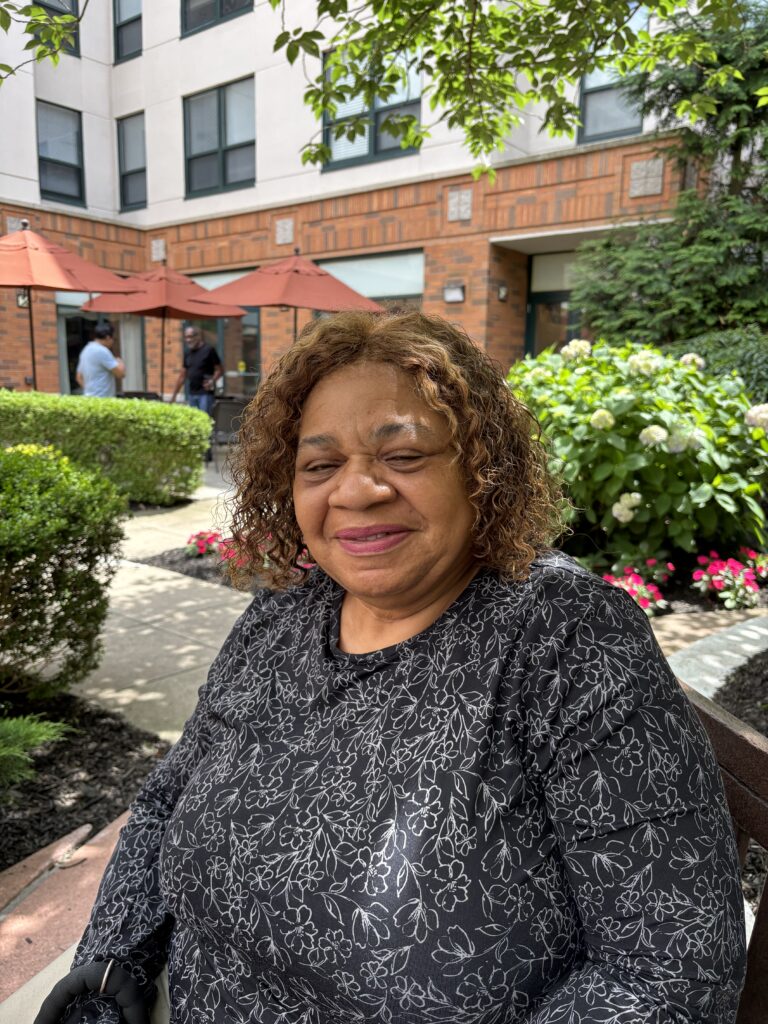
My name is Debbie Myers. I’m also an evangelist. My title is Evangelist Virtuous Debbie Myers. I am a member of the Atlah Worldwide Ministries Church. We’re located in Manhattan.
I said I would talk about respect because sometimes people want respect, but they don’t give it.
Growing Up and Early Lessons
I’m 68 years old. I’m not ashamed of my age. I have never been. I was more conscious of my weight growing up and throughout my life than I was of my age. I don’t know why, but that’s how it was.
My mother used to tell me, “Respect your elders.” She worked in nursing, and she worked with elderly people in private duty. As a matter of fact, she worked over here at North Shore Hospital. She would tell me about the patients and how they would react, and I would see some of her patients when I went to visit her.
Most of them were elderly people. Some were not so sick, and some were. Some came from wealthy families. So I was used to being around people of a certain age.
My mother would tell me, “Respect your elders. Show respect. Mind your own business and leave other people’s business alone.” Because God gives us a whole year: six months to mind your own business and six months to leave other people alone.
I remembered that as I grew up.
Teaching and Respect at Rikers Island
I’m a teacher. I still am. I’m a special education teacher, and the children and young people I worked with were mostly males. I worked at Rikers Island from 1990 until this past July.
It was a matter of respect. I showed them respect. I didn’t go there judging what they had done. I wasn’t dealing with choirboys. But I showed them respect.
I addressed them by their names. I would say, “Excuse me.” I would say, “Sir,” even when it was a young person, younger than me. I gave them respect that way. Then I expected the same thing back.
Life at Atria and Navigating Disrespect
Coming here to Atria, I see a lot of elderly people again. Some of them are nice, friendly, and respectful. And some of them are not. Some of them are very mean. They think they’re entitled to be mean, and I don’t know where that entitlement comes from.
But I find, again, a lack of respect when someone feels entitled to be very nasty to someone else and believes that person doesn’t have the right to react or to say, “That’s not acceptable.”
How do I navigate that? I call them out on it.
I would say to them, “Would you repeat that? I don’t think everybody heard that.”
Sometimes I try to ignore them. Sometimes you can’t ignore certain behavior because people think that if you don’t say something, they can continue the behavior.
So I can do one of two things. I can remove myself from the situation and keep my peace, because I’m always going to keep my peace. That’s the most important thing to me.
The other is to stand in your truth. Speak up. Face it and face them.
I do what I have to do and continue to show respect for myself and my boundaries. If people do not respect those boundaries, then I show them what the consequences are.
Personal Philosophy on Respect
I’m not perfect. I have my ways and things that I need to work on. But I’m not so into myself that I cannot say to someone, “I’m very sorry if that offended you. If I hurt your feelings, I’m sorry.”
But if someone doesn’t feel they owe you an apology, or they feel entitled to do something nasty, then I don’t have to be nice. I don’t choose to be nice to them.
You get what you get. You get what you give.
That’s what I’ve learned. As I said, I’m 68 years old. I’ve learned that in life. You show respect to people, and nine times out of ten, you’re going to get respect from people.
A person is not perfect. They may have done things that would make you say, “Oh, I never would have thought about even speaking to someone like that.” But if you show them respect and they know it’s genuine, then they can return the same.
Life at Atria and Personal Outlook
I came to Atria in December. A lot of people are here, and some of them may feel that this is the end for them. I still feel that my life is out there and not just here.
I can share my experiences. I can share my friendship with many people on many different levels. Maybe they don’t think I can, but I really can.
I feel at home wherever I go because I’m at peace with myself. If people don’t want to accept who I am, I’m not trying to please them. I really am not. I’ve passed that stage. I am not trying to please people.
You can’t. You’ve got to do it for yourself.
Family and Full Circle
I have two children, two adult children, and two grandchildren. My youngest grandchild is 16, and my oldest is 19, almost 20. Both of them are what you would call scholars. They are very bright. Very bright.
My children live nearby, about 15 or 20 minutes away.
Being here is really a full circle for me in a way because I actually went to school in this area. I went to elementary school over here. I went to Cardozo High School. I went to Queens College. My first job was at North Shore Hospital in the laundry.
So I’ve come full circle.
I didn’t realize at first where I was or that this was the area. My daughter was born in Manhasset. So it’s really not strange that I should be here, but I hadn’t thought about it in a while. I hadn’t really thought about it.
Ministry and Work
My life has been spent doing other things with the ministry and whatnot. I have a prison ministry, which is very, very difficult to do. It wasn’t difficult when I was working, but it is difficult when you’re trying to bring people out of a certain mindset.
Working at Rikers was challenging, but I taught many young men to read who didn’t know the alphabet.
I also worked with the culinary arts program.
I helped many of them get their GEDs so they could go on to do more things in life. Although I’m not perfect with computers, I taught some computer skills so they could go into entry-level jobs and move on from there.
So I did the ministry in one way, but maybe not the way I had intended to do it. I was just being myself, and that’s how I did it. I guess they felt the genuineness in me.
Marriage and Personal Growth
I’ve been married twice.
I have my children from my first marriage. I married when I was 18. We started early, but I also finished early. There is a three-year gap between those kids. I didn’t have them right on top of each other. I had a lot of help from my mom.
The first marriage didn’t last. Later, I thought maybe I would give marriage another chance since I was older and my children were older. I remarried.
I think that came out of my prison ministry experience because I married a criminal.
I don’t hold things against people. I meet you for who you are. I treat you according to who you are. Until you show me who you are, I believe you.
He wasn’t a smooth operator, though. But he managed to steal my heart for a while.
To a certain degree, when people think they’re a smooth operator, I think I’m a little smoother. There’s a song, “50 Ways to Leave Your Lover.” I didn’t do it that way, but I have to say this: I’m the smooth operator here.
I did it myself. The Lord showed me how to do it. Remember, I told you I’m an evangelist.
I did not leave with bitterness. I did not leave by being nasty. I put things in order, put them in the lawyer’s hands, and left the situation at that.
I didn’t need closure because I already had it in my own way.
Conclusion
I found that I don’t have to go and bash someone to prove my point. The point is, I protect my peace.
Whatever they do, whatever they want to do, that’s on them.
And I am free to enjoy my life.
That’s the story for me.
Scribe’s Reflection
Sitting with Debbie, I found myself smiling often.
She has a wonderful combination of conviction, humor, and confidence that makes you feel immediately at ease. There is no pretense with her. She says what she believes, stands firmly in it, and somehow does so with both strength and grace.
As I listened, I realized this story wasn’t simply about respect. It was about self-respect.
Debbie has spent a lifetime learning that respecting others does not mean abandoning yourself. Whether she was teaching young men at Rikers Island, serving through her ministry, navigating difficult relationships, or finding her place at Atria, she has carried the same quiet philosophy: treat people with dignity, expect dignity in return, and never sacrifice your peace to keep someone else comfortable.
I was especially moved by the way she spoke about the young men she taught at Rikers. She didn’t begin with what they had done. She began with who they were. Calling them “sir,” learning their names, and helping them believe they were capable of more than their circumstances revealed something profound about her character. Respect, for Debbie, has never been something someone earns. It is something she chooses to offer because it reflects who she is.
I also appreciated her honesty. She doesn’t pretend to be perfect. She speaks openly about her marriages, her mistakes, and the lessons she’s learned without bitterness or blame. There is a freedom that comes from someone who has made peace with her own story.
Perhaps what stayed with me most was her repeated commitment to protecting her peace. It wasn’t spoken as avoidance or withdrawal. It was spoken as wisdom. Sometimes protecting your peace means walking away. Sometimes it means speaking up. Sometimes it means simply refusing to carry what belongs to someone else.
By the end of our conversation, I wasn’t thinking about respect as a rule of good manners. I was thinking about it as a way of living. A practice of honoring ourselves and others without losing our center.
Debbie has come full circle in many ways, returning to the community where so much of her life began. Yet what feels most complete is not where she lives, but who she has become.
She knows who she is.
She knows what she stands for.
And perhaps that is the deepest form of peace any of us can hope to find.
Every resident carries a lifetime of moments, memories, losses, laughter, love, and wisdom that deserve to be seen and remembered.
Atria Stories exists to pause, listen, and honor the lives that have shaped families, communities, and generations.
Because these are not just stories from the past.
They are living legacies still unfolding.