The Beginning
I first came to Shalom in 1977. My therapist suggested a retreat at Kirkridge led by protégés of Jerry and Elizabeth, and something in me responded immediately.
At the time, my life was unraveling.
My husband and I were in the painful process of divorcing. Looking back, “painful” hardly seems like a strong enough word. The word that comes to me is vivisecting, as though every part of my life were being cut open and examined. People kept encouraging me to get in touch with my anger, and I kept insisting I wasn’t angry.
Then someone mentioned a retreat, and my stomach trembled.
Something inside me already knew.
I remember watching my first mat work and seeing a woman expressing a level of rage that shocked me. It was one of those moments when you suddenly see yourself clearly. As I watched her, I realized, That’s me. That’s what’s living inside of me too.
It was one of those moments when the truth arrives before your mind can argue with it.
By the end of that experience, I felt lighter, freer, and more alive than I had in a very long time.
Finding Home
What surprised me most was how quickly Shalom felt like home.
I didn’t grow up in a family where there was much hugging or emotional openness. My mother was too guarded for that, and my father struggled with alcoholism. Physical affection simply wasn’t part of our family culture.
Yet when I arrived at Shalom, the hugging, the warmth, and the openness all felt strangely familiar. Not foreign. Not uncomfortable. Familiar.
It felt as though I were remembering something rather than learning something new.
My experience was, “Oh yes, finally.”
I often say that I must have known this kind of community somewhere before. Whether that was another chapter of life, another time, or simply something my soul had always longed for, I don’t know. What I do know is that I recognized it immediately.
I came to the Mountain for the first time in 1979 and returned year after year. Then, when my father died in 1985, Jerry invited me to attend three retreats in a row.
That invitation changed everything.
Until then, I had mostly been a retreat participant. After that, I became part of the larger community. I began attending summer retreats and work weekends. I formed deeper friendships. I discovered there was an entire world of programs and experiences beyond the annual retreats.
Shalom stopped being a place I visited and became a place I belonged.
Discovering Who I Am
One of the greatest gifts Shalom gave me was permission to discover who I actually was.
I had done everything I thought I was supposed to do. I got married. I had children. I built a family. I had a good career and a comfortable home.
From the outside, my life looked successful.
But something wasn’t working.
What I’ve come to understand is that my marriage wasn’t a mistake. My former husband is a wonderful man. We have a great relationship now, and there is still a great deal of love and respect between us. We love our family and the life we created together.
We simply shouldn’t have gotten married.
At the time, that was what people did. You got married, you had a family, and you built a life together. Those were the expectations, and I followed them.
My mother had taught me that these were the things that were supposed to make a person happy. Yet despite having all of them, I knew something essential was missing.
The divorce was incredibly painful. The word vivisecting still feels accurate. But as painful as it was, it also became a doorway.
It forced me to ask questions I had never allowed myself to ask before.
Who am I beneath expectations?
Who am I when I stop performing the roles I’ve been given?
What do I actually want?
Shalom gave me a place where those questions were welcomed.
Over time, I learned that self-discovery is not a one-time event. It is a lifelong unfolding. Every retreat revealed another layer. Every friendship reflected another truth. Every challenge invited me deeper.
Body Sacred
One of the more surprising parts of my journey involved the sexuality and spirituality retreats that eventually evolved into what became Body Sacred.
Now, the funny thing is that I have never been someone whose life revolved around sexuality. In many ways, I identify as an asexual person. Even as a young woman, sexuality wasn’t the central driving force that it seemed to be for many others.
But embodiment was another matter.
I loved swimming. I loved movement. I loved anything that helped me feel present in my body.
Body Sacred wasn’t really about sexuality for me.
It was about freedom.
It was about authenticity.
It was about stepping beyond shame and social conditioning and learning how to inhabit myself more fully.
In the early 1990s, I became part of the original development of Body Sacred. I participated in early planning conversations and even helped test the weekend’s structure before it was launched more broadly.
To watch something that began as a vision become a thriving community thirty years later has been one of the great joys of my life.
Community and Service
Community has always been the thread running through it all. That’s what keeps bringing me back: the love, the acceptance, and the opportunity to be completely myself.
There are very few places in life where people are invited to show up exactly as they are and be welcomed there. Shalom has been one of those places for me.
It has taught me that being fully human is sacred work. It has also taught me that service is sacred work.
In the late 1980s, I wanted to attend a retreat I couldn’t afford. Jerry suggested I earn credits by cooking.
At the time, I thought that sounded reasonable.
Then I found myself responsible for feeding an entire retreat.
I remember lying in bed the night before and thinking, What on earth have I gotten myself into?
I had all the ingredients. I had all the menus. I had absolutely no confidence. But somehow it worked.
And then it worked again.
Before long, I was cooking for large retreats on my own. My feet often hurt by the end of the week, but I loved every minute of it.
There is something deeply satisfying about feeding people who are doing transformational work. Food becomes part of the experience, part of the holding, and part of the love.
Looking back now, I realize that cooking was simply another way I helped build community.
Going Through
One of the things I appreciate most about Shalom is that it continually asks us to move through our fears rather than around them.
Jerry used to say there is no way around, over, or under life’s challenges. You have to go through them.
I’ve always imagined that journey as standing at the edge of the ocean. The waves are filled with dragons and frightening creatures, and every instinct tells you to stay safely on shore.
But beyond those waves lies calm water.
The only way to reach it is to walk forward.
That has been one of the great lessons of my life: trust the process, trust your unfolding, and go through not around.
Cultivating the Soul
When people ask what Shalom has given me, the first word that comes to mind is depth.
I believe we are here to cultivate the soul. Every lifetime is an opportunity to tend the garden of the soul, and Shalom has helped me do exactly that.
It has taught me gratitude, generosity, and how to love more deeply. Most importantly, it has taught me how to be uplifted. Before Shalom, I don’t think I truly knew what that felt like.
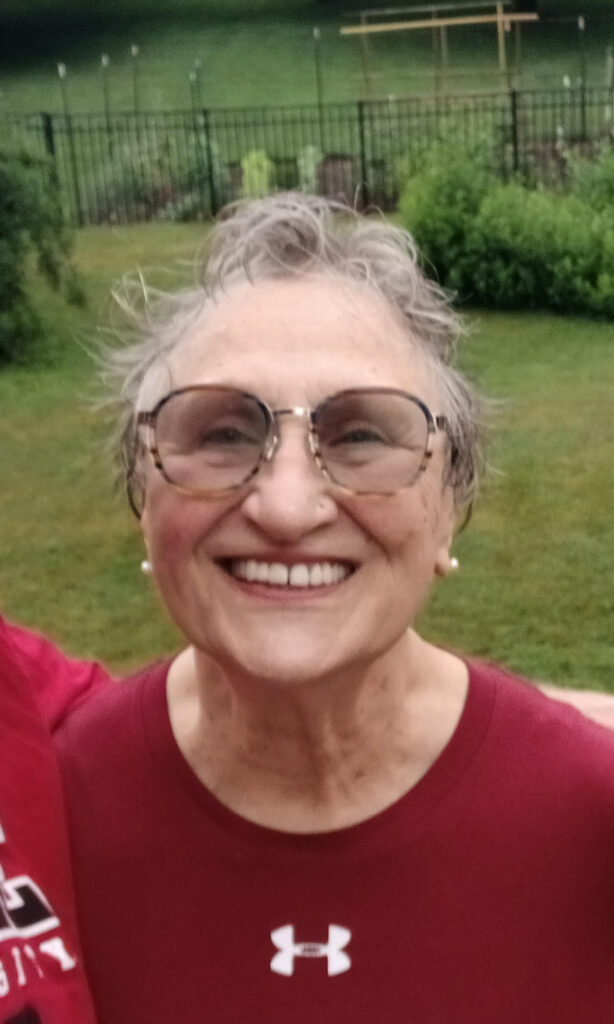
Today, at eighty-three years old, I feel grateful for my life. I feel grateful for the relationships that surround me and for the generations of people who have come through this community.
I feel positive about the future. I feel uplifted. And I feel grateful that Shalom helped me discover who I am.
Gratitude
I also find myself grateful for the people who helped shape that journey. Jerry was one of those people. We loved each other deeply and knew each other heart to heart and soul to soul. He knew how grateful I was for his presence in my life, and I remain grateful that I was led into his presence through Shalom.
I am also deeply grateful for Bea. She was always cooking, always preparing wonderful food that people looked forward to having again. Her warmth, generosity, and care nourished this community in countless ways, and her presence was an important part of what made Shalom feel like home.
Georgeanne, too, had a profound influence on my unfolding. She showed me what was behind the veil of the mystic. As a mystic herself, and through her paintings, I surrendered into the world beyond our mundane reality.
For Future Generations
If I could say anything to future generations, it would be this:
Go for it.
You are worth the investment.
Trust yourself. Trust the process. Trust your unfolding.
There are blessings waiting for you that you cannot yet imagine.
Shalom is more than a retreat center. It is a sacred community. It is a place that generates goodness in the world.
Especially in times like these, we need places that help us stay human, stay loving, and stay connected to what matters most. As technology continues to reshape our world, communities like this remind us of something essential: love, presence, and genuine human connection still matter.
For nearly five decades, Shalom has been one of those places for me.
And for that, I am profoundly grateful.
A Scribe’s Reflection
As I listened to Carol tell her story, I found myself returning again and again to one word:
Depth.
It is the word Carol herself chose when asked what Shalom had given her. Yet by the end of our conversation, it seemed to describe far more than her experience of Shalom. It described the way she has lived her life.
There is a quiet depth to Carol.
Not the kind that announces itself loudly or demands attention. Rather, the kind that emerges slowly through years of asking honest questions, facing difficult truths, and continuing to show up for life with curiosity and gratitude.
What struck me most was that Carol’s story is not one of dramatic transformation. It is a story of unfolding.
When she first arrived at Shalom, she was in the midst of a divorce she described as “vivisecting.” Yet even in the middle of that pain, there was something in her that recognized she was being called toward something larger. Her stomach trembled when she heard about the retreat. Watching another woman express her anger, she recognized something in herself she had not yet been willing to see.
Again and again throughout her story, that same theme emerged: recognition.
Recognizing her own anger.
Recognizing a community that felt strangely familiar.
Recognizing that a life that looked successful from the outside was not fully aligned on the inside.
Recognizing that her marriage was not a mistake, but neither was it her path.
Recognizing that self-discovery is not an event but a lifelong practice.
There is a wisdom in Carol’s reflections that can only come from someone who has spent decades listening to the deeper currents of her own life.
I was particularly moved by the tenderness with which she spoke about her former husband. In a culture that often asks us to choose heroes and villains, successes and failures, Carol offered something far more nuanced. She spoke of love, respect, gratitude, and the realization that two good people can build a beautiful family together and still not be meant to spend a lifetime as partners.
That insight alone feels like a profound act of liberation.
Throughout her story, community appears again and again as both a refuge and a teacher. Shalom became more than a place Carol visited. It became a place where she belonged. A place where she could ask difficult questions, be welcomed exactly as she was, and continue discovering who she was becoming.
I found myself smiling when she spoke about cooking. What began as a practical way to earn retreat credits became another expression of service. Carol may not have stood at the front of the room leading programs, but she helped nourish countless people who were doing their own transformational work. There is something beautifully symbolic about that. While others were feeding their souls, Carol was helping feed their bodies.
And perhaps that is one of the gifts she has offered this community for so many years.
Nourishment.
Not only through food, but through presence, steadiness, generosity, and care.
By the end of our conversation, I understood why Carol chose the word depth.
Depth is what happens when we stop living only on the surface of our lives.
Depth is what happens when we are willing to go through rather than around.
Depth is what happens when we allow ourselves to be changed by love, loss, friendship, community, and time.
At eighty-three years old, Carol speaks not with nostalgia but with gratitude. She remains curious. She remains open. She remains willing to be surprised by life.
Perhaps that is the greatest lesson I took from her story.
The soul is never finished unfolding.
And sometimes the places that help us become ourselves become part of us forever.
Jennifer Mark, Scribe
Voices That Matter
Storytelling as legacy. Listening as medicine
This story is part of Voices That Matter: Shalom’s 50th Anniversary
There is no cost to participate. Only a willingness to share a story.
This project, like all community offerings within Voices That Matter – The Scribe Project, is sustained through the support of those who feel called to be part of it, by sharing stories, spreading the word, or contributing to its creation and ongoing life.
If you feel moved, you are welcome to contribute in whatever way feels right.
If you’re part of the Shalom community, this is an open invitation.
Shalom holds 50 years of stories.
I would love to include yours as part of this growing living archive.